



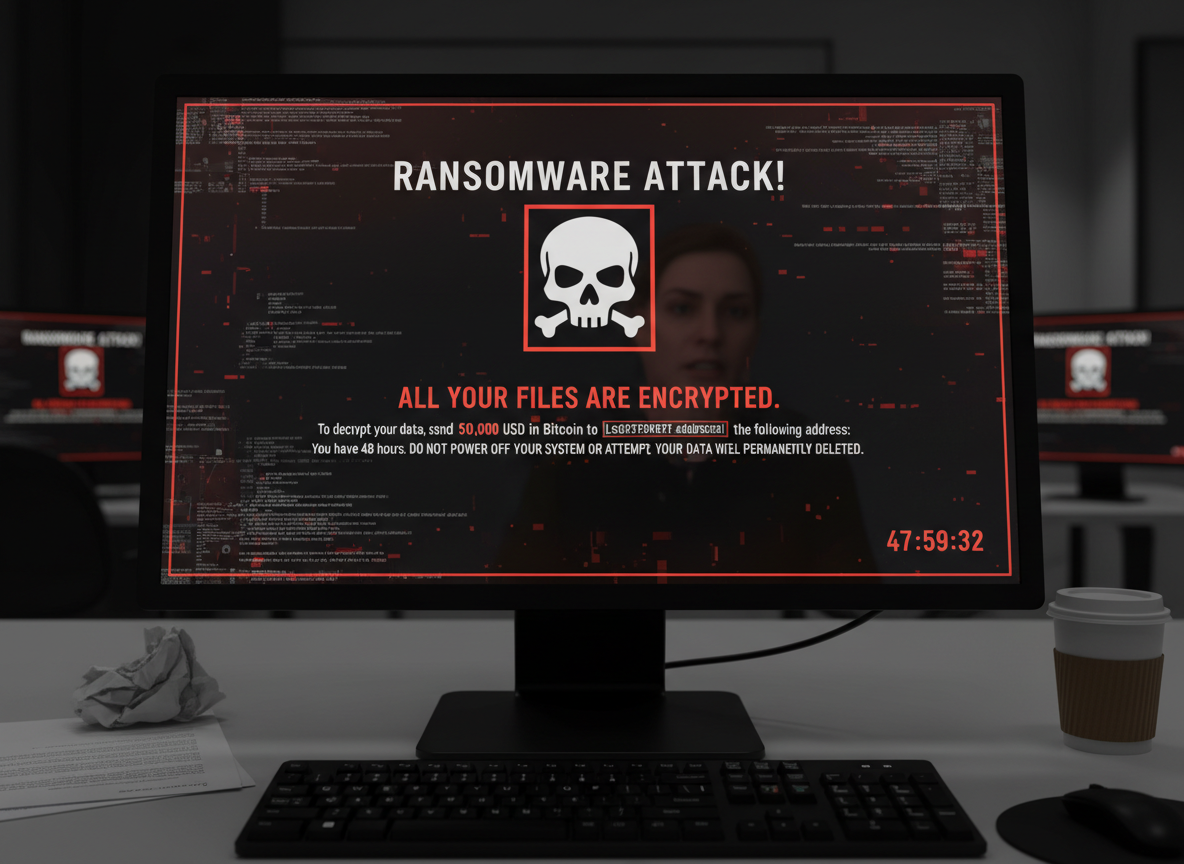
Ransomware has become one of the most destructive threats facing law firms today. Criminal groups know that legal practices hold extremely sensitive information and cannot afford operational downtime—making them ideal victims. The question isn’t why attacks happen; it’s why law firms remain so unprepared.
Attackers understand that law firms maintain vast repositories of confidential data: merger details, criminal evidence, trade secrets, financial disclosures, settlement strategies. This data has enormous street value and equally enormous pressure for recovery. Criminals exploit that leverage.
Law firms also rely heavily on email communication, making them vulnerable to phishing — the most common entry point for ransomware. One click on a malicious link can infect the entire system. Smaller firms often lack dedicated cybersecurity teams, outdated systems go unpatched, and backups are poorly maintained.
Ransomware attacks follow a predictable pattern: infiltrate the system, encrypt all critical files, exfiltrate sensitive documents, and demand payment for restoration and non-disclosure. Even if a firm pays, attackers often leak or sell the data anyway.
Remote work increased these risks dramatically. Home networks, personal devices, and unsecured Wi-Fi connections expose firms to new attack vectors. VPN misuse, weak passwords, and shared family devices widen vulnerabilities.
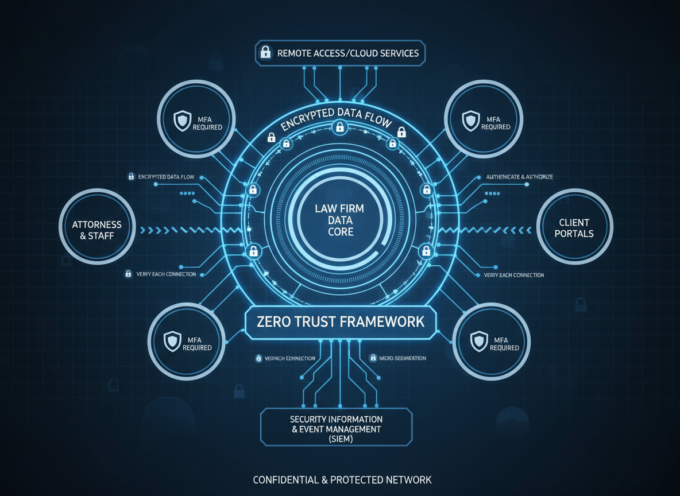
Prevention requires layered defense. Law firms must deploy endpoint protection, continuous monitoring tools, MFA, secure email gateways, and strict access controls. Regular backups stored in isolated environments ensure quick recovery without paying ransom.
Employee training remains the single most effective mitigation strategy. Lawyers and staff must learn to identify phishing attempts, avoid unsafe downloads, and report suspicious activity immediately.
Regulations now mandate stricter protection. Many jurisdictions require breach disclosure within days, and cyber insurance providers demand higher security standards.
Ransomware isn’t slowing down. Attackers know law firms will pay to recover data and avoid reputation damage. The firms that survive will be those that build cybersecurity into their daily operations—not as a last-minute reaction to disaster.










Leave a comment