



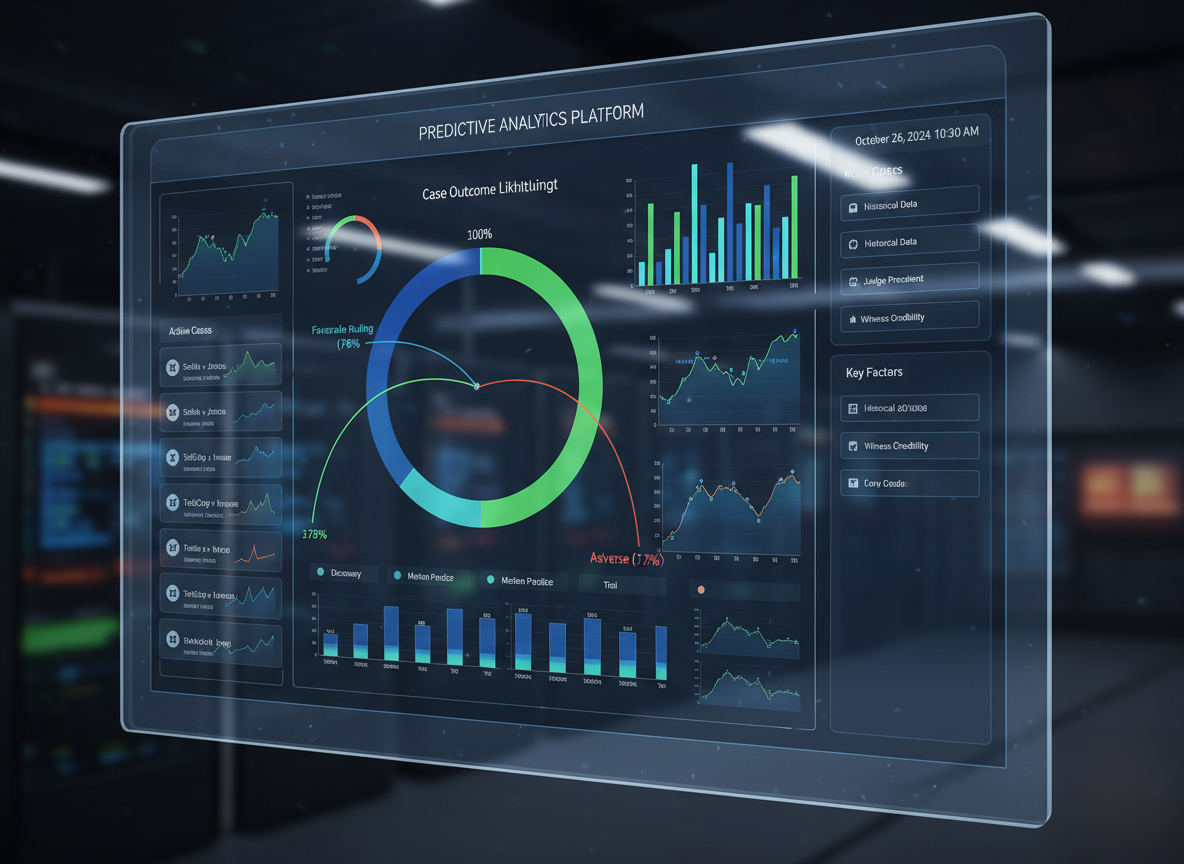
Predictive analytics is moving law from intuition-driven decision-making to data-backed forecasting. AI models can analyze historical judgments, judge behavior, legal arguments, and jurisdictional trends to predict the likelihood of case outcomes with increasing accuracy.
The traditional problem is uncertainty. Lawyers rely on experience, precedent knowledge, and professional judgment, but human reasoning is limited by time and cognitive bandwidth. AI enhances this by evaluating thousands of prior cases in seconds, identifying patterns humans cannot detect manually.
Predictive models ingest variables such as judge tendencies, success rates of certain motions, nature of evidence, timeline of filings, opposing counsel behavior, and historical win/loss ratios. Machine learning then assigns probability scores—for example, the likelihood of winning a summary judgment motion or the expected damages range.
Law firms use this in litigation strategy, settlement negotiations, risk assessment, and budgeting. Corporate legal departments rely on predictive analytics to evaluate exposure before moving forward with expensive litigation.
Medical-related cases, intellectual property disputes, and contract conflicts show especially strong predictive accuracy because they follow patterns across jurisdictions.
The biggest misconception is that AI “decides the outcome.” It doesn’t. It provides a statistical lens, not a verdict. Lawyers still interpret the predictions, assess nuance, and present arguments.
The future of predictive analytics involves real-time updates during trial phases, integrating live evidence, jury profiles, and sentiment analysis. As data expands, AI’s forecasting abilities will only improve.
Predictive analytics is becoming a competitive necessity. Firms using it negotiate smarter, litigate more efficiently, and manage client expectations with greater precision.














Leave a comment